Quick Answer: A standard heat pump in New Zealand costs between $0.15 and $0.60 per hour to run, depending on the unit size, efficiency rating, and your electricity rate. For a typical 5kW wall-mounted heat pump running 6-8 hours per day, expect to pay roughly $150-$300 per quarter in additional electricity costs.
What’s in This Guide
- Heat Pump Running Costs by Size
- How Much Electricity Does a Heat Pump Use?
- Factors That Affect Running Costs
- How to Reduce Heat Pump Running Costs
- Heat Pump vs Other Heating Costs
- Why Choose Weka Electrical
- Frequently Asked Questions
Heat Pump Running Costs by Size
The biggest factor in your heat pump power usage is the unit’s capacity and how hard it needs to work to maintain your target temperature. Here’s a breakdown of typical running costs for heat pumps commonly installed in New Zealand homes.
| Heat Pump Size | Typical Room | Input Power (kW) | Cost Per Hour | Est. Quarterly Cost* |
|---|---|---|---|---|
| 2.5kW (small) | Bedroom, study | 0.5 – 0.8 kW | $0.15 – $0.25 | $80 – $135 |
| 3.5kW (medium) | Medium living room | 0.7 – 1.1 kW | $0.20 – $0.35 | $110 – $190 |
| 5kW (large) | Large living area | 1.0 – 1.6 kW | $0.30 – $0.50 | $160 – $270 |
| 7kW+ (ducted/multi) | Whole home | 1.8 – 3.0 kW | $0.55 – $0.95 | $300 – $520 |
*Based on 6 hours daily use during winter months at $0.31/kWh (average NZ residential rate). Actual costs vary by electricity provider and plan.
These figures represent what the heat pump draws from the wall, not its heating output. Thanks to the heat transfer process, a heat pump delivers 3-5 times more heating energy than the electrical energy it consumes. This ratio is known as the Coefficient of Performance (COP).
How Much Electricity Does a Heat Pump Use?
To calculate your heat pump’s electricity usage, you need to understand three numbers: input power, COP rating, and your electricity rate.
Understanding COP and kWh
Input power is how much electricity the heat pump draws from the grid. A unit with 1.2kW input power running for one hour uses 1.2 kWh of electricity.
COP (Coefficient of Performance) measures efficiency. A COP of 4.0 means the heat pump produces 4kW of heat for every 1kW of electricity consumed. Higher COP ratings mean lower running costs.
Quick Calculation
Hourly cost = Input power (kW) x Electricity rate ($/kWh)
Example: 1.2kW input x $0.31/kWh = $0.37 per hour
Daily cost (6 hours): $0.37 x 6 = $2.22
Monthly cost (winter): $2.22 x 30 = $66.60
Most modern heat pumps sold in New Zealand have a COP between 3.5 and 5.5 for heating. Inverter models (which make up the vast majority of units sold today) are significantly more efficient than older fixed-speed models because they can modulate their compressor speed rather than cycling on and off.
Real-World vs Rated Efficiency
The COP rating on the label is measured under specific test conditions. In practice, efficiency drops as the outdoor temperature falls. A unit rated at COP 4.5 in mild conditions might operate at COP 2.5-3.0 when it’s 0 degrees outside. This means your heat pump works harder and uses more electricity during the coldest weeks of winter when you need it most.
Wellington’s temperate coastal climate means heat pumps generally operate closer to their rated efficiency for most of the heating season, making them a particularly cost-effective heating choice for the region.
Factors That Affect Running Costs
1. Insulation Quality
This is the single biggest factor after the heat pump itself. A well-insulated home retains heat far more effectively, meaning the heat pump reaches temperature faster and cycles down to low power. Homes with poor insulation, single glazing, or draughty windows force the heat pump to run at higher output for longer, dramatically increasing electricity usage.
2. Room Size vs Unit Capacity
An undersized heat pump for the room will run at maximum capacity constantly, using more power and still failing to reach a comfortable temperature. An oversized unit will cycle on and off frequently, which also wastes energy. Correct sizing by a qualified installer is essential for efficiency.
3. Thermostat Settings
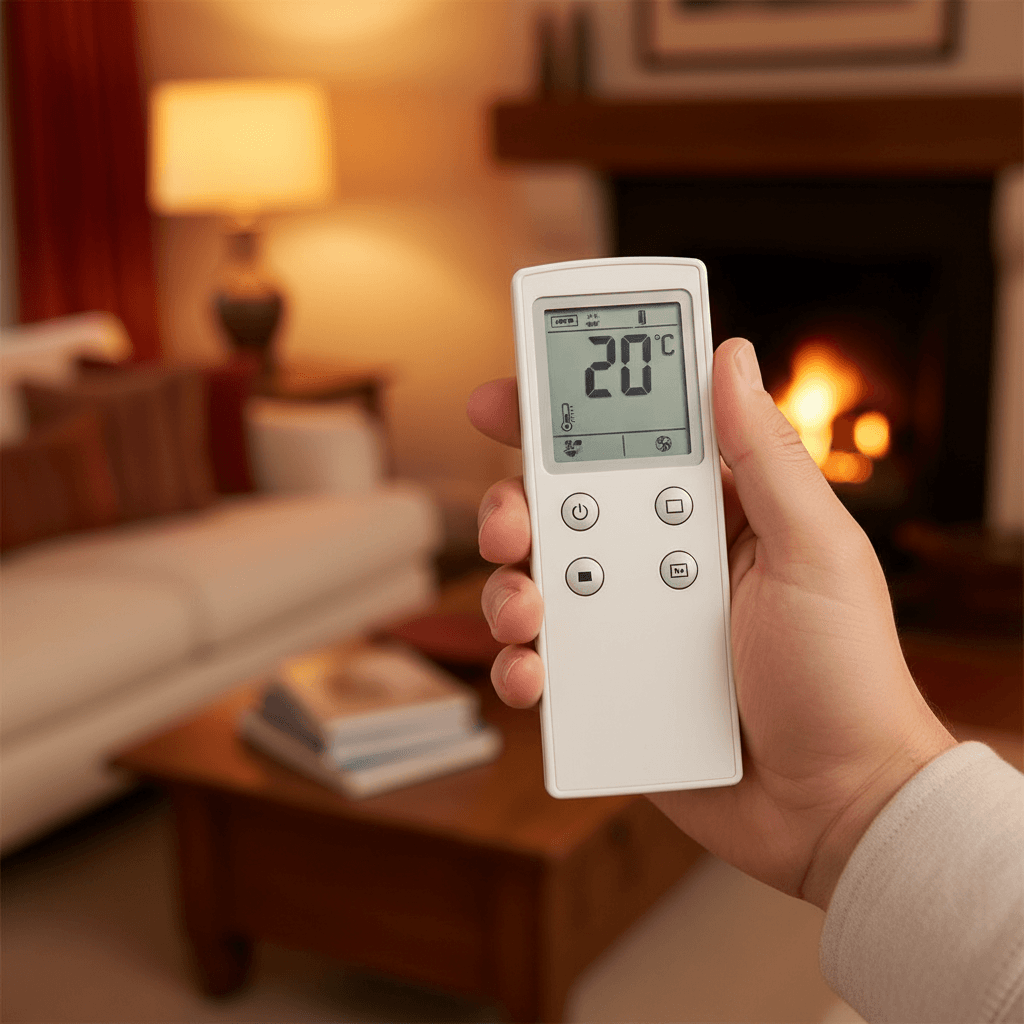
Every degree above 21 degrees Celsius increases running costs by roughly 10%. Setting your heat pump to 18-20 degrees for general living areas and 16-17 degrees for bedrooms is both comfortable and cost-effective.
4. Usage Patterns
Running the heat pump consistently at a lower temperature is more efficient than blasting it on high to heat a cold room quickly. If you’re away during the day, use the timer to start heating 30 minutes before you get home rather than coming home to a cold house and cranking it up.
5. Maintenance
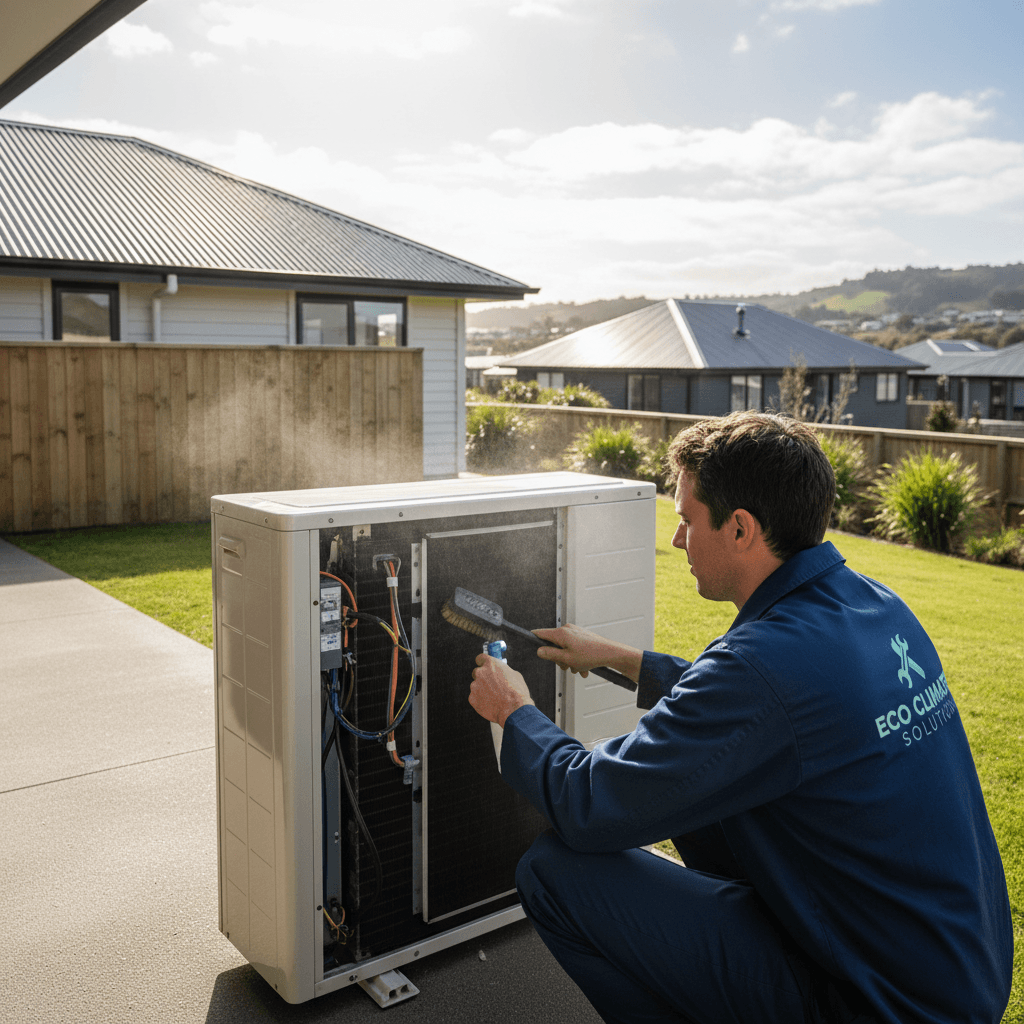
Dirty filters restrict airflow and force the unit to work harder. Cleaning your filters every 2-4 weeks during heavy use can reduce running costs by 5-15%. An annual professional service also keeps the outdoor unit’s coils clean and the refrigerant charge optimal.
6. Electricity Rate
NZ residential electricity rates range from roughly $0.25 to $0.38 per kWh depending on your provider, plan, and region. Switching to a cheaper plan or a provider with lower off-peak rates can reduce your heat pump costs without changing how you use it.
How to Reduce Heat Pump Running Costs
| Tip | Potential Saving |
|---|---|
| Clean filters regularly (every 2-4 weeks in winter) | 5-15% |
| Set to 18-20 degrees instead of 22-24 | 10-20% |
| Use the timer to pre-heat rather than blast-heat | 10-15% |
| Close doors and curtains to contain heat | 10-20% |
| Annual professional service | 5-10% |
| Upgrade to a higher-rated inverter model | 20-40% |
Heat Pump vs Other Heating Costs
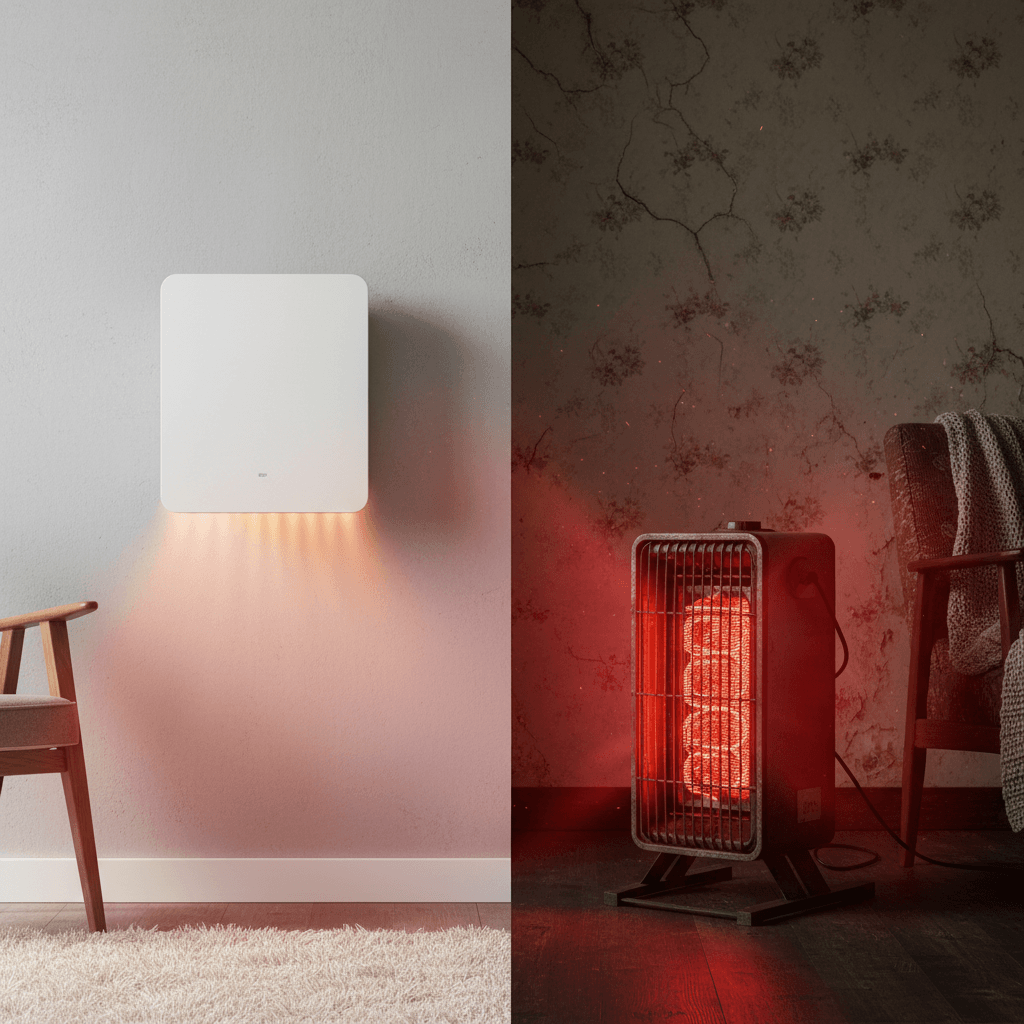
Heat pumps are consistently the cheapest form of whole-room heating in New Zealand. Here’s how they compare to other common heating methods.
| Heating Method | Cost Per Hour (approx.) | Efficiency |
|---|---|---|
| Heat pump (inverter) | $0.15 – $0.50 | 300-550% (COP 3.0-5.5) |
| Wood burner | $0.30 – $0.70 | 65-80% |
| Flued gas heater | $0.40 – $0.80 | 80-90% |
| Panel heater | $0.50 – $0.65 | 100% |
| Oil column heater | $0.50 – $0.75 | 100% |
| Fan heater | $0.60 – $0.75 | 100% |
| Unflued gas heater | $0.35 – $0.60 | 90% (moisture + health risks) |
Electric resistive heaters (panel, oil column, fan) convert electricity to heat at a 1:1 ratio. A heat pump delivers 3-5 times more heat per unit of electricity because it moves heat from outside rather than generating it. Even when electricity rates go up, a heat pump still costs a fraction of what plug-in electric heaters cost to achieve the same level of warmth.
Why Choose Weka Electrical for Heat Pump Installation
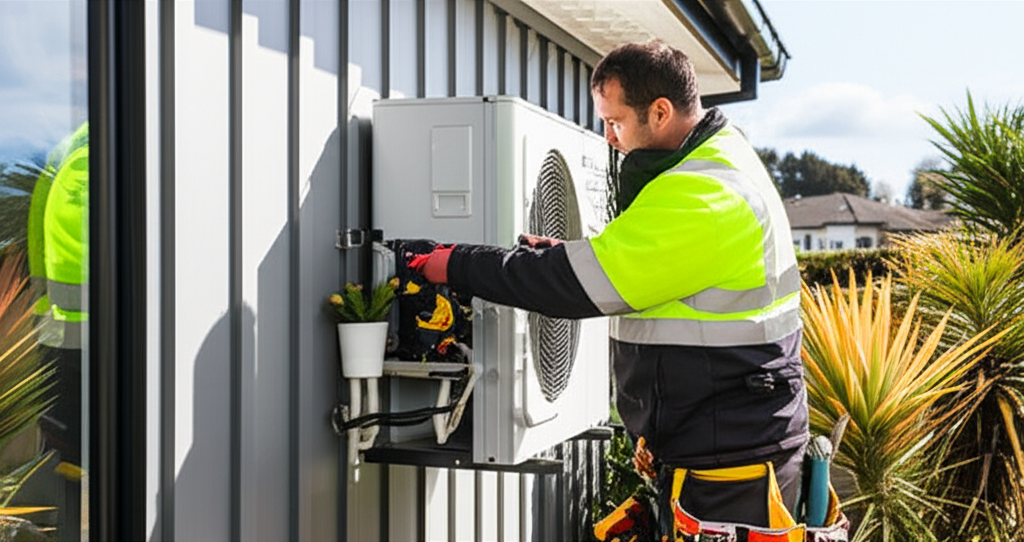
Getting the best running costs from your heat pump starts with correct installation. Our heat pump installation service in Wellington includes a proper heat load assessment to make sure you get the right-sized unit for your space. An oversized or undersized unit will always cost more to run than a correctly matched one.
We install all major brands across the Wellington region, including Lower Hutt, Upper Hutt, Porirua, and the Kapiti Coast. Every installation includes the electrical work, mounting, commissioning, and a walkthrough of the most efficient settings for your home.
Frequently Asked Questions
Is it cheaper to leave a heat pump on all day?
Not usually. For most homes, it’s more cost-effective to use the timer and run the heat pump only when you need it. The exception is very well-insulated homes where maintaining a low base temperature (15-16 degrees) all day can sometimes use less energy than reheating from cold. For most New Zealand homes, turning the unit off when you’re out and using the timer to pre-heat is the better approach.
How much does a heat pump add to your power bill?
For a typical 3-bedroom Wellington home using a single 5kW heat pump as the primary heating source, expect an increase of roughly $50-$100 per month during winter. This replaces whatever you were previously spending on other heating methods, so the net increase is usually much less. Many homeowners find their overall heating costs decrease after switching from electric heaters to a heat pump.
What is the cheapest heat pump to run?
Heat pumps with the highest energy star rating and COP will be the cheapest to run. Currently, premium inverter models from brands like Mitsubishi Electric, Daikin, and Fujitsu offer COP ratings above 5.0, meaning they produce over 5kW of heat for every 1kW of electricity. While these units cost more upfront, the ongoing savings typically pay back the difference within 3-5 years.
Does a heat pump use more power in cooling mode?
Cooling mode uses slightly less electricity than heating in most conditions because the temperature difference between inside and outside is typically smaller in summer than in winter. However, if you’re trying to cool your home significantly below the outdoor temperature on a very hot day, the unit will work harder and use more power.
How many kWh does a heat pump use per day?
A typical 3.5kW wall-mounted heat pump uses between 4-8 kWh per day during winter, depending on insulation, outdoor temperature, and thermostat settings. A larger 7kW ducted system can use 12-20 kWh per day. At current NZ electricity rates, that translates to roughly $1.20-$2.50 per day for a wall unit and $3.70-$6.20 per day for a ducted system.
Do heat pumps work in cold weather?
Yes, modern inverter heat pumps work effectively down to outdoor temperatures of -15 to -25 degrees Celsius, depending on the model. Efficiency does decrease as temperatures drop, but Wellington’s mild winter climate (rarely below 0 degrees) means heat pumps operate near their rated efficiency for most of the heating season. This makes them an ideal heating solution for the region.