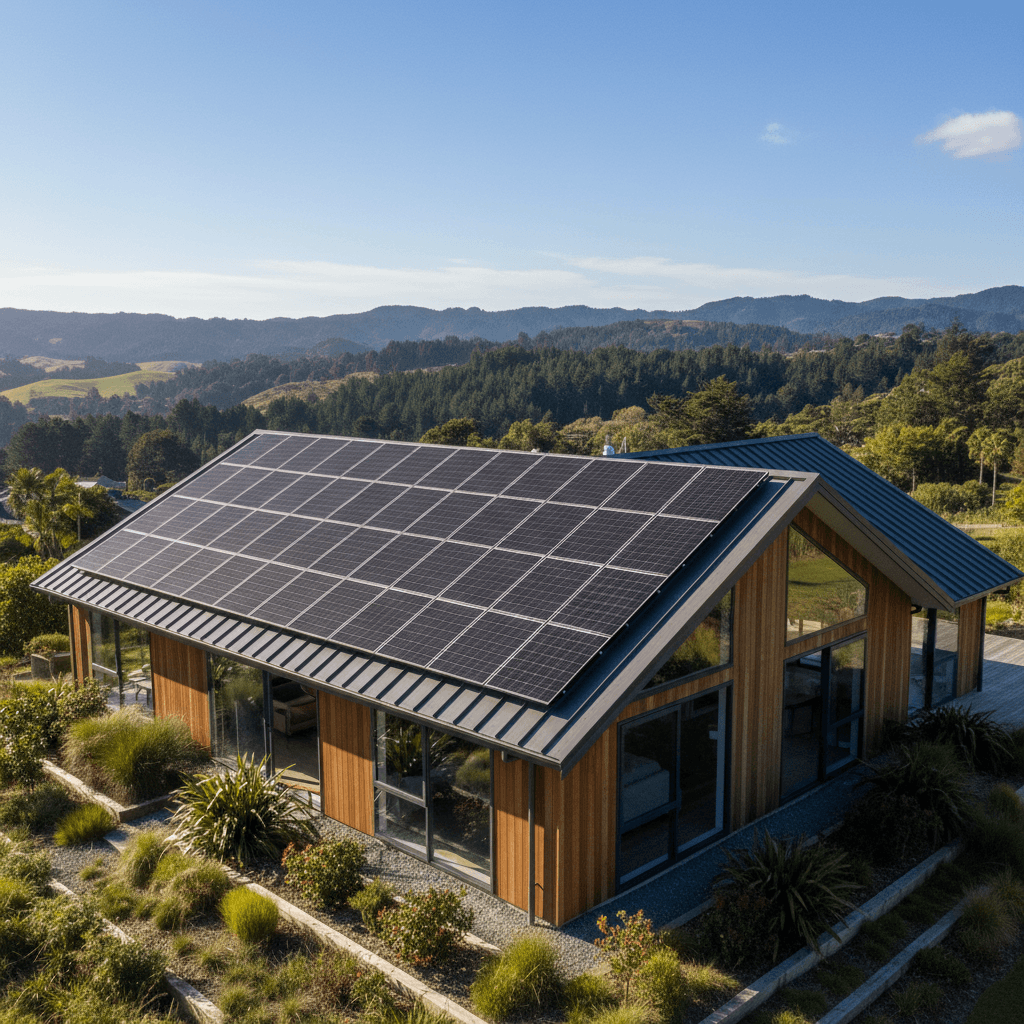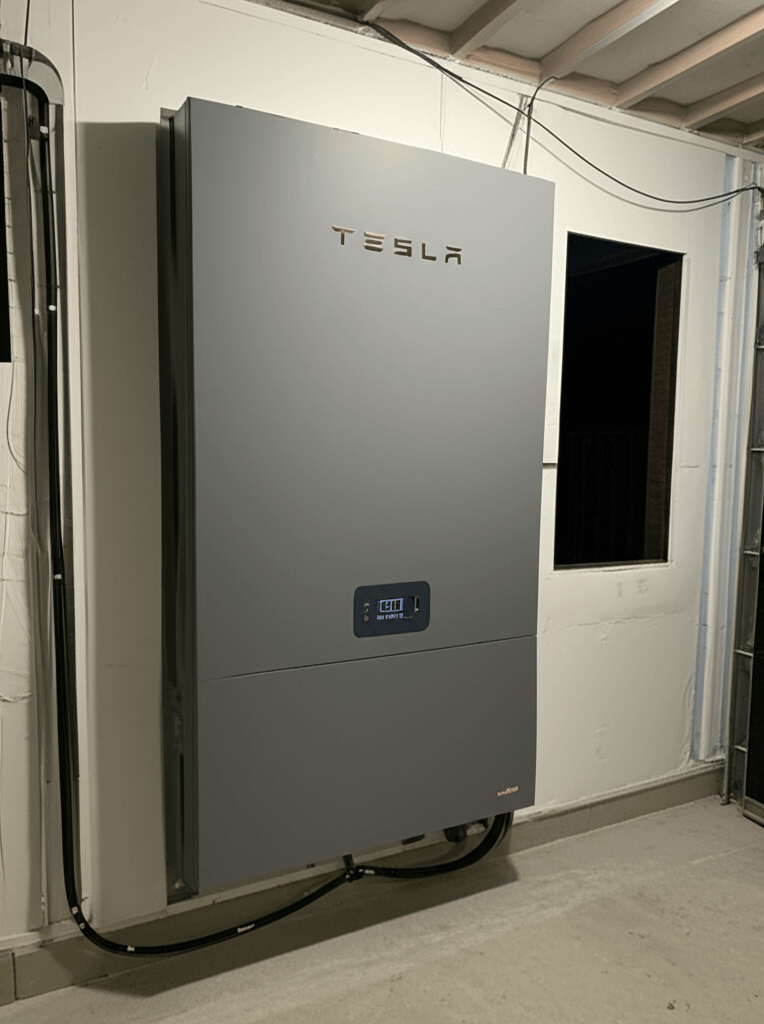
Quick Answer: A solar battery can be worth it in New Zealand if you have solar panels and want to maximise self-consumption, reduce reliance on the grid, or have backup power during outages. However, the financial payback depends on your electricity usage patterns, power prices, and how much you value energy independence.
What’s in This Guide
- How Solar Batteries Work
- Solar Battery Costs in NZ
- Key Benefits of Solar Batteries
- Important Considerations
- Is a Solar Battery Right for You?
- Why Choose Weka Electrical
- Frequently Asked Questions
How Solar Batteries Work
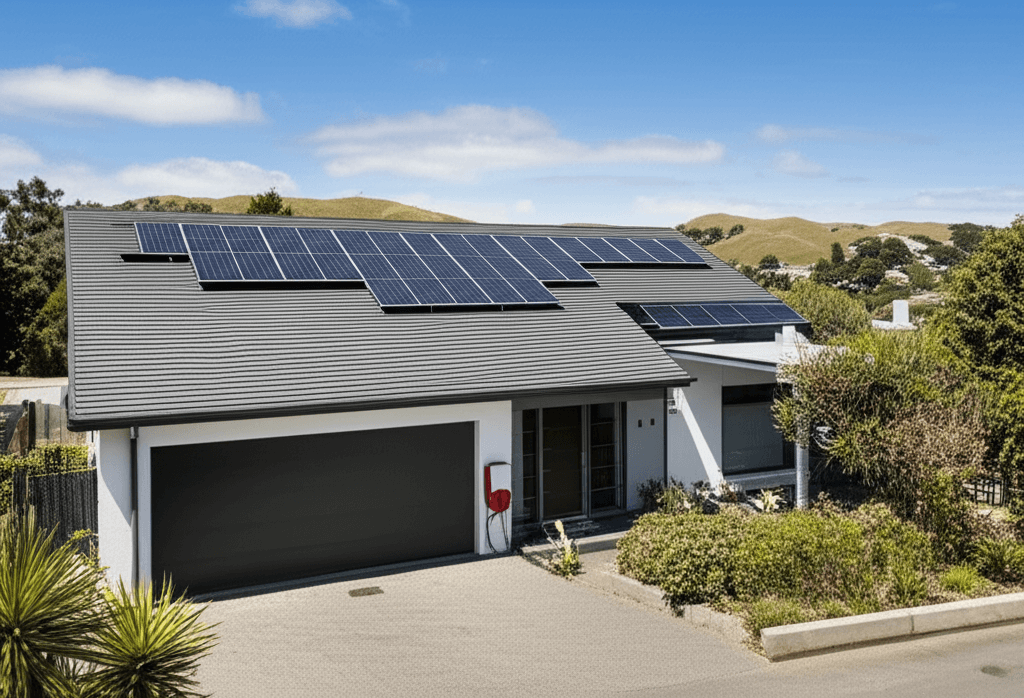
Solar batteries store excess electricity generated by your solar panels during the day. Instead of exporting surplus power back to the grid (often at low buy-back rates), you can save it to use in the evening when your panels aren’t producing.
The Basic Process
- Daytime generation: Your solar panels produce electricity from sunlight
- Power your home first: Solar energy runs your appliances directly
- Store the excess: Surplus power charges your battery
- Evening use: When the sun goes down, your battery powers your home
- Grid backup: If your battery runs flat, you draw from the grid as normal
Common Battery Technologies
| Battery Type | Lifespan | Best For |
|---|---|---|
| Lithium-ion (LFP) | 10-15 years | Most residential systems |
| Tesla Powerwall | 10+ years | Whole-home backup |
| BYD Battery-Box | 10-15 years | Scalable systems |
| Enphase | 10+ years | Modular expansion |
Solar Battery Costs in New Zealand
Solar battery prices have dropped significantly over the past few years, but they still represent a substantial investment. Here’s what you can expect to pay in 2026.
Typical Price Ranges
| Battery Capacity | Price Range (Installed) | Suitable For |
|---|---|---|
| 5 kWh | $8,000 – $12,000 | Small households, couples |
| 10 kWh | $14,000 – $20,000 | Average family home |
| 13.5 kWh (Powerwall) | $18,000 – $24,000 | Larger homes, backup priority |
| 20+ kWh | $25,000+ | High usage, off-grid capable |
These prices include professional installation, which is essential for safety and warranty compliance.
Key Benefits of Solar Batteries
1. Maximise Your Solar Investment
Without a battery, you might export 50-70% of your solar generation back to the grid at low feed-in rates (often just 7-12 cents/kWh). With a battery, you use more of your own power and buy less from the grid at 25-35 cents/kWh.
2. Energy Independence
Reduce your reliance on the grid and protect yourself from rising electricity prices. As power costs increase, your savings grow.
3. Backup Power During Outages
Some battery systems (like Tesla Powerwall) provide backup power when the grid goes down. This is increasingly valuable as weather events become more frequent.
4. Time-of-Use Optimisation
If you’re on a time-of-use tariff, you can charge your battery during off-peak periods and use that power during expensive peak times.
5. Reduced Carbon Footprint
Using more of your own clean solar energy means less reliance on grid power, which may include fossil fuel generation during peak demand.
Important Considerations
Payback Period Reality
Let’s be honest: the financial payback on batteries is longer than solar panels alone. A typical battery might save you $800-$1,500 per year, meaning a 10-15 year payback period. This is close to the battery’s lifespan.
You Need Solar First
A battery without solar panels doesn’t make financial sense. You’d just be storing grid power to use later – with efficiency losses along the way.
Sizing Matters
An oversized battery might never fully charge. An undersized one won’t meet your evening needs. Professional assessment is essential to get the balance right.
Installation Requirements
Batteries need proper ventilation, suitable temperature conditions, and compliant electrical connections. This isn’t a DIY project.
Is a Solar Battery Right for You?
A solar battery makes sense if:
- You already have solar panels (or are installing them)
- You use most of your power in the evening
- You value energy independence over pure financial return
- You want backup power for outages
- You’re planning to stay in your home long-term
It might not be worth it if:
- You’re home during the day using solar directly
- Your priority is fastest possible payback
- You’re planning to move within 5 years
- You don’t have solar panels yet (add panels first)

Why Choose Weka Electrical
Our solar installation services cover complete system design, including battery storage integration. We help Wellington homeowners navigate the options to find the right solution for their needs and budget.
What We Offer
- Honest assessment: We’ll tell you if a battery makes sense for your situation
- Quality products: We install proven brands with strong warranties
- Professional installation: Fully compliant with NZ electrical standards
- Ongoing support: We’re here if you have questions down the track
Considering solar batteries? Get in touch for a free assessment and honest advice.
Frequently Asked Questions
How long do solar batteries last?
Most modern lithium batteries last 10-15 years with proper use. Warranties typically guarantee 70-80% capacity retention after 10 years.
Can I add a battery to my existing solar system?
Yes, in most cases. Some older inverters may need upgrading to a hybrid model, but many systems can be retrofitted with batteries.
Do solar batteries work during a power outage?
Only if the system is designed for backup. Standard grid-tied systems shut down during outages for safety. Backup-capable systems like Tesla Powerwall can keep your lights on.
What size battery do I need?
Most NZ homes do well with 10-13 kWh. This covers evening usage for a typical family. We assess your actual consumption patterns to recommend the right size.
Are there government rebates for solar batteries in NZ?
Currently, there are no nationwide rebates specifically for batteries. However, some regional councils and lines companies offer incentives. Check with your local council or electricity provider.
Can I go completely off-grid with a battery?
Technically yes, but it requires a much larger system and significant investment. For most urban homes, staying grid-connected with battery backup is more practical and cost-effective.