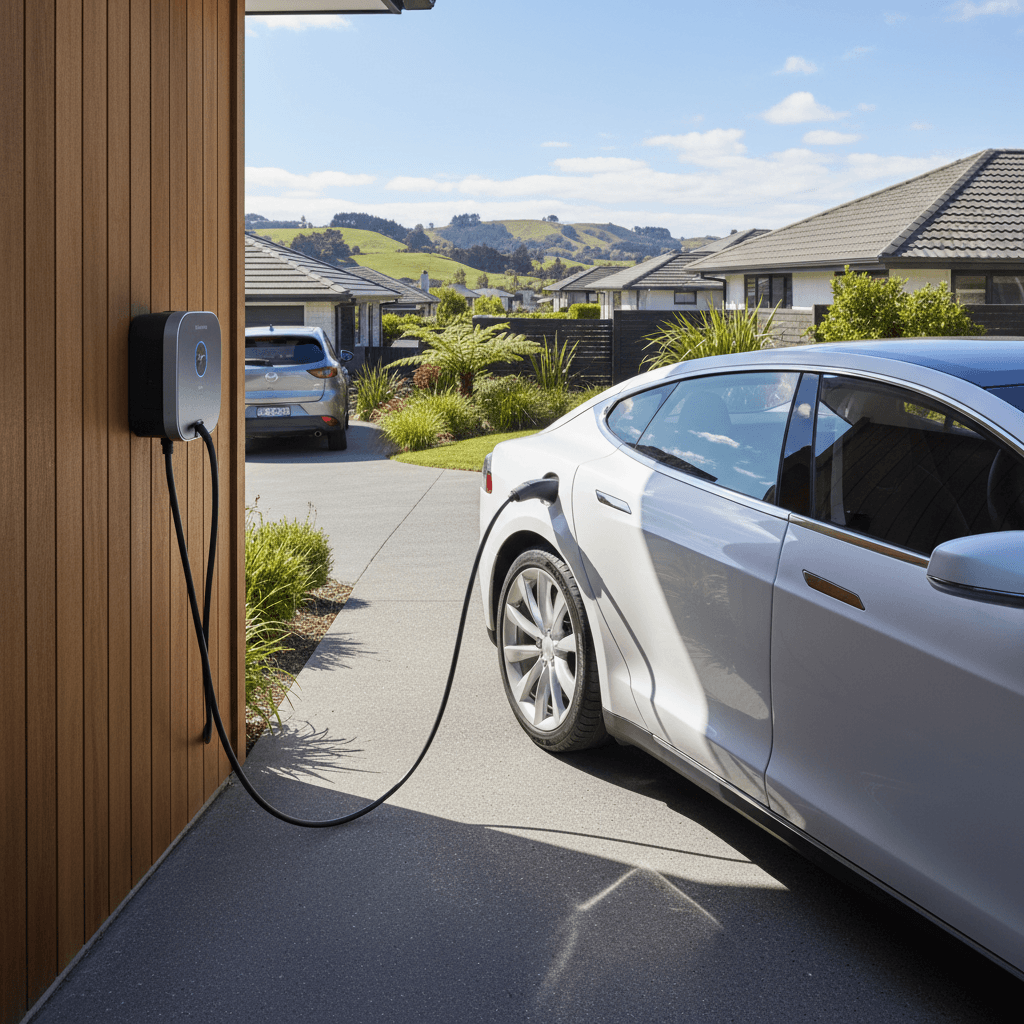
Quick Answer: With petrol prices in NZ hovering around $2.80-$3.20 per litre and global oil supply becoming less reliable, switching to an electric vehicle with home EV charging can cut your transport fuel costs by up to 75%. A full charge costs roughly $4-$8 compared to $80-$120 to fill a petrol tank.
What’s in This Guide
- The Oil Crisis: What’s Driving NZ Petrol Prices Up
- How EV Charging in NZ Offers a Way Out
- Petrol vs Electric: The Real Cost Comparison
- Setting Up EV Charging at Home
- Why Choose Weka Electrical
- FAQs

The Oil Crisis: What’s Driving NZ Petrol Prices Up
New Zealand imports nearly all of its oil. That means every time global oil markets get disrupted, Kiwi drivers feel it at the pump. In 2026, petrol prices in NZ continue to fluctuate thanks to a combination of OPEC production decisions, geopolitical tensions, and supply chain constraints that show no signs of easing.
The reality is that New Zealand has almost no control over the price of petrol. Whether it’s conflict in oil-producing regions, shipping disruptions, or refinery shutdowns, the cost flows straight through to the forecourt. Wellington drivers are currently paying between $2.80 and $3.20 per litre for 91 octane, and premium fuels push well past $3.50.
This isn’t a temporary spike. The long-term trend for fossil fuel prices is upward. As global demand shifts and extraction becomes more expensive, the era of cheap petrol is behind us. For New Zealand households spending $200-$400 per month on fuel, that’s a significant and growing household expense.
Why NZ Is Especially Vulnerable
- 100% import dependent – NZ’s Marsden Point refinery stopped processing crude oil in 2022, meaning all refined fuel is now imported
- Long supply chains – Fuel shipments travel thousands of kilometres, adding cost and vulnerability to disruption
- Limited strategic reserves – NZ holds relatively small fuel reserves compared to other OECD nations
- Exchange rate exposure – Oil is priced in USD, so a weaker NZ dollar pushes pump prices even higher
How EV Charging in NZ Offers a Way Out
Electric vehicle charging in NZ is powered primarily by renewable energy. Around 80-85% of New Zealand’s electricity comes from hydro, geothermal, wind, and solar sources. That means when you charge your EV at home, you’re running on clean, locally generated power rather than imported oil.
This is the fundamental shift. Instead of being at the mercy of global oil markets, EV owners lock in predictable, stable energy costs. Electricity prices in NZ do fluctuate, but nowhere near the volatility of petrol. And unlike oil, New Zealand actually produces its own electricity.
The EV Charging Network Is Growing Fast
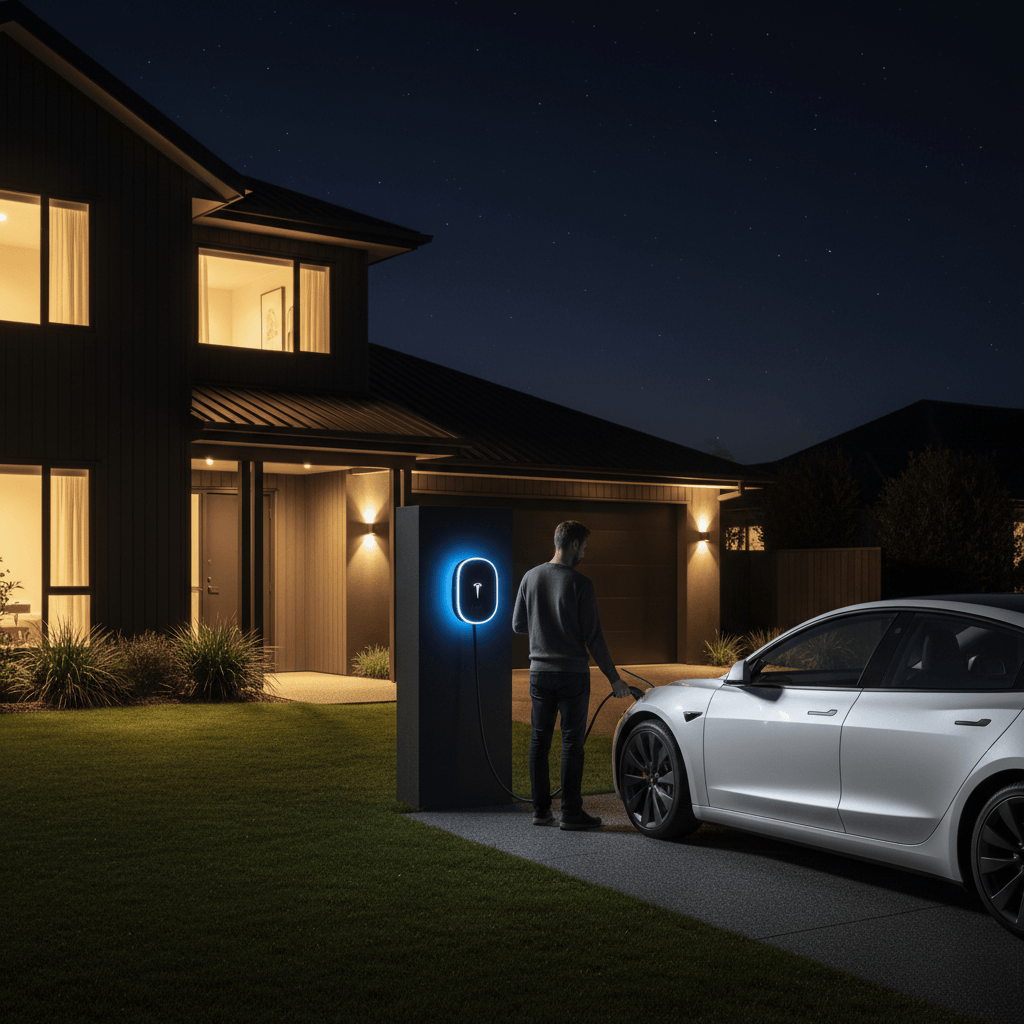
New Zealand’s public EV charging infrastructure has expanded rapidly. ChargeNet, Meridian, and other providers now operate thousands of charging stations nationwide. But for most EV owners, the majority of charging happens at home, overnight, using the cheapest off-peak electricity rates.
A home EV charger (Level 2) typically delivers a full charge in 4-8 hours. Plug in when you get home, wake up to a full battery. No more detours to the petrol station, no more watching the price board and wondering if you should fill up today or wait.
Petrol vs Electric: The Real Cost Comparison
The numbers make a compelling case. Here’s how the cost to charge an electric car in NZ compares to running a petrol vehicle over the same distance.
| Cost Factor | Petrol Vehicle | Electric Vehicle |
|---|---|---|
| Fuel cost per 100km | $18 – $25 | $3 – $6 |
| Annual fuel cost (15,000km) | $2,700 – $3,750 | $450 – $900 |
| Monthly fuel spend | $225 – $310 | $38 – $75 |
| Price stability | Volatile (oil market dependent) | Stable (local electricity) |
| Exposure to oil crisis | High | None |
Based on average NZ petrol price of $3.00/L, average consumption of 8L/100km for petrol, 18kWh/100km for EV, and residential electricity rate of $0.28/kWh.
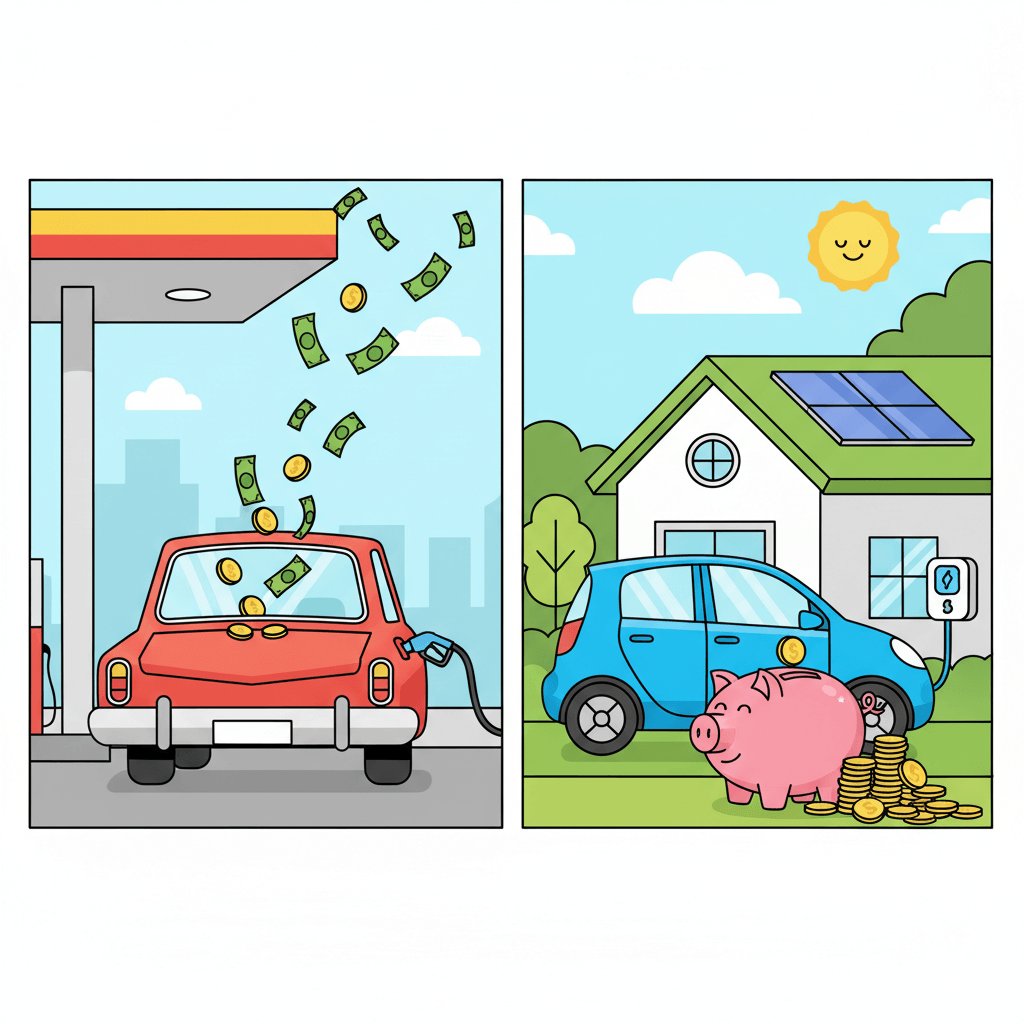
That’s a saving of $2,000 to $3,000 per year on fuel alone. Over a typical 5-year ownership period, you’re looking at $10,000-$15,000 in fuel savings. For a two-car household that switches both vehicles, the savings double.
What About Off-Peak Charging?
Many NZ electricity providers offer cheaper off-peak rates between 9pm and 7am. If you set your EV home charger to charge overnight (which most smart chargers do automatically), your EV charging cost drops even further. Some households report spending as little as $25-$30 per month on EV charging using off-peak rates.
Setting Up EV Charging at Home
The most convenient and cost-effective way to charge your EV is at home. A dedicated Level 2 EV charger installed in your garage or carport gives you fast, reliable charging every night without relying on public stations.
What’s Involved in an EV Charger Install
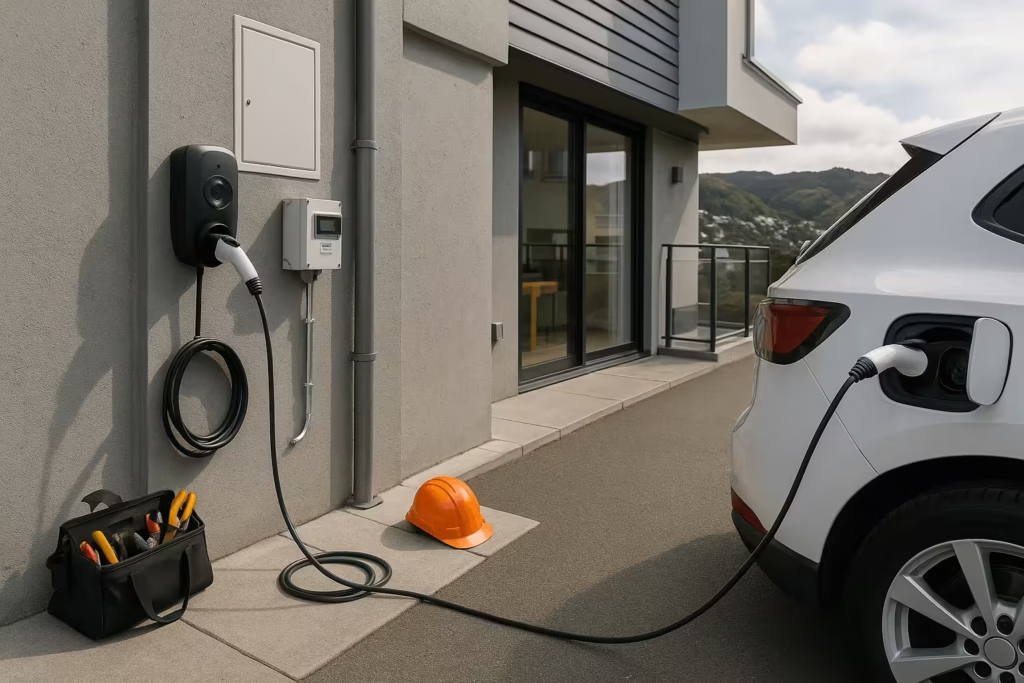
A qualified electrician will assess your home’s electrical capacity, ensure your switchboard can handle the additional load, and install a dedicated circuit for the charger. The process typically takes half a day and includes:
- Switchboard assessment – Checking your existing electrical capacity and whether an upgrade is needed
- Dedicated circuit installation – Running a new circuit from your switchboard to the charger location
- Charger mounting and wiring – Securely installing the wall-mounted unit and connecting it
- Testing and commissioning – Verifying everything works safely and walking you through the charger’s features
EV Charger Installation Cost in NZ
| Component | Typical Cost |
|---|---|
| Level 2 EV charger unit | $800 – $2,500 |
| Installation labour | $500 – $1,200 |
| Switchboard upgrade (if needed) | $500 – $2,000 |
| Total typical range | $1,300 – $3,500 |
When you consider the annual fuel savings of $2,000-$3,000, most EV home charger installations pay for themselves within the first 12-18 months.
Why Choose Weka Electrical
Our team has installed hundreds of EV chargers across the Wellington region. Our EV charger installation service in Wellington covers everything from the initial assessment through to commissioning, ensuring your home charging setup is safe, efficient, and future-proofed.
- Experienced team – We’ve worked with all major EV charger brands including Easee, ABB, Wallbox, and more
- Full electrical assessment – We check your switchboard capacity before quoting so there are no surprises
- Wellington-wide coverage – From Kapiti to Lower Hutt, we cover the greater Wellington region
- Clean, tidy workmanship – Professional cable management and mounting every time
Frequently Asked Questions
How much does it cost to charge an electric car in NZ?
On standard residential electricity rates (around $0.28/kWh), a full charge for a typical EV with a 60kWh battery costs roughly $6-$8. Using off-peak rates, this can drop to $4-$5. That’s equivalent to about 300-400km of driving range for under $10.
Is NZ electricity clean enough to make EVs worthwhile?
Yes. Around 80-85% of New Zealand’s electricity comes from renewable sources (hydro, geothermal, wind, solar). This is one of the highest renewable percentages in the world, making EV charging in NZ significantly cleaner than in most countries.
Will the oil crisis affect electricity prices too?
NZ electricity prices have minimal exposure to global oil markets because the grid runs primarily on renewable generation. While gas-fired peaker plants can influence marginal pricing, the overall impact of oil price volatility on your electricity bill is small compared to the direct hit on petrol costs.
How long does it take to charge an EV at home?
With a Level 2 home charger (7kW), a typical EV charges from 20% to 80% in about 4-6 hours. Most owners plug in overnight and wake up to a full battery. A standard 3-pin plug charger takes 12-20 hours, which is why a dedicated EV charger is recommended.
Do I need to upgrade my switchboard for an EV charger?
It depends on your home’s existing electrical capacity. Older homes with smaller switchboards may need an upgrade to safely handle the additional load. A qualified electrician will assess this during the quoting process and let you know upfront.
Can I charge my EV with solar panels?
Absolutely. Pairing a home EV charger with a solar panel system means you can charge your vehicle using free energy from the sun. This takes your fuel costs to virtually zero and completely removes your exposure to both oil and electricity price fluctuations.