
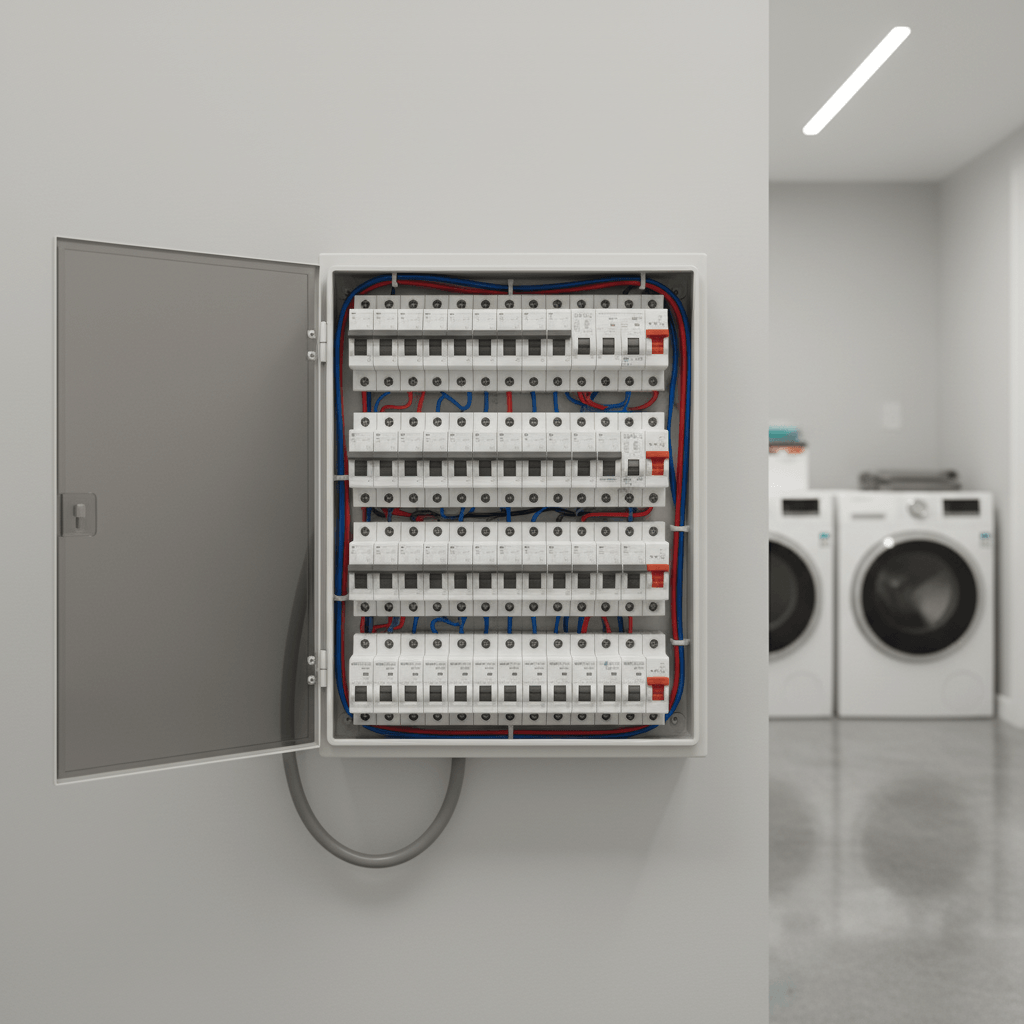
Quick Answer: An RCBO (Residual Current Breaker with Overcurrent protection) combines the functions of an RCD and an MCB into a single device. It protects against both earth leakage faults and overcurrent/short circuits, giving each circuit its own independent protection. RCBOs are now the preferred choice for modern switchboard upgrades in New Zealand.
What’s in This Guide
- What Is an RCBO?
- RCBO vs RCD vs MCB: What’s the Difference?
- Types of Circuit Breakers Explained (Type B, C, D)
- When Do You Need an RCBO?
- How Much Do RCBOs Cost in NZ?
- Why Choose Weka Electrical
- Frequently Asked Questions
What Is an RCBO?
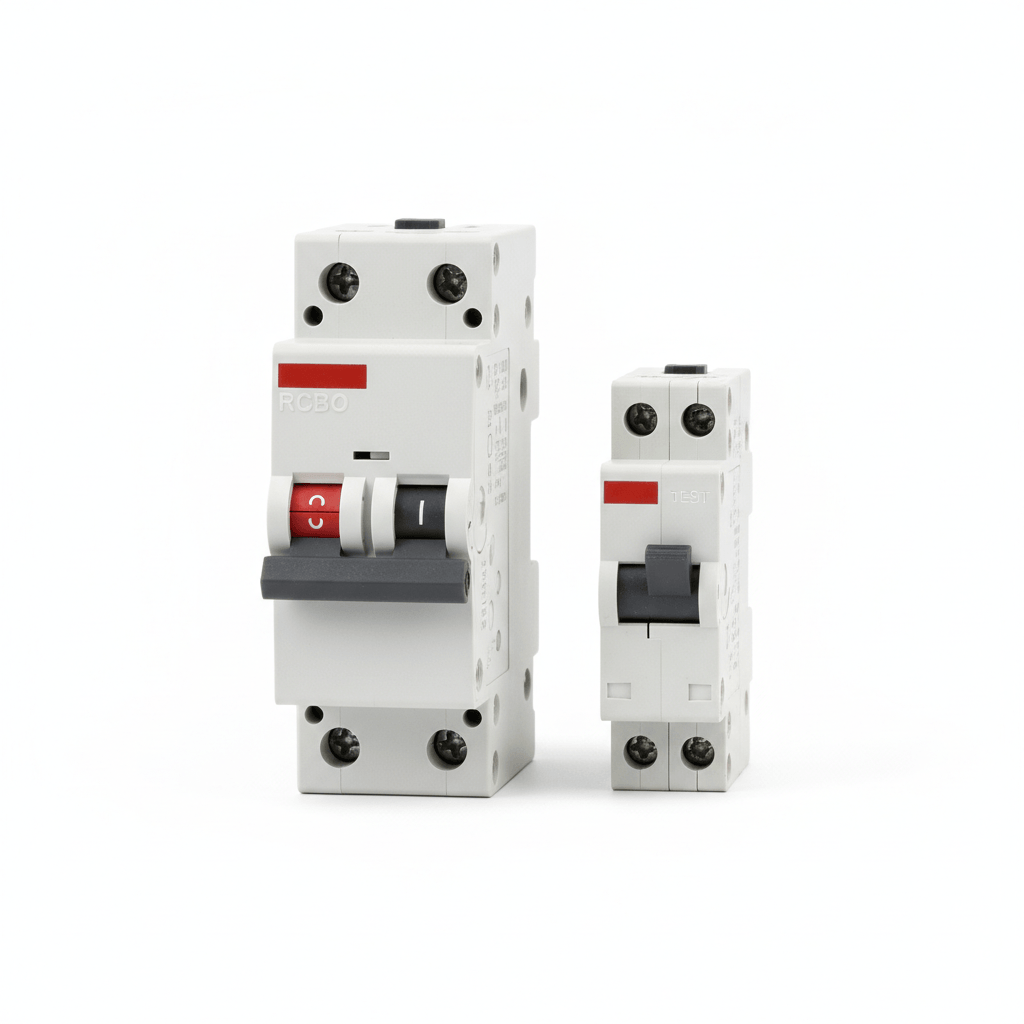
An RCBO stands for Residual Current Breaker with Overcurrent protection. It’s a compact electrical safety device that does the job of two separate components in one unit.
Traditional switchboards use a combination of RCDs (residual current devices) and MCBs (miniature circuit breakers) to protect your home’s circuits. The RCD detects earth leakage faults that could cause electric shock, while the MCB protects against overcurrent and short circuits. An RCBO combines both functions into a single device that sits on one DIN rail slot in your switchboard.
The key advantage is selective protection. When you have a standard RCD protecting a group of circuits, a fault on any one circuit will trip the RCD and cut power to every circuit in that group. With RCBOs, each circuit has its own independent protection. If a fault occurs on your kitchen circuit, only that circuit trips while the rest of your home stays powered.
RCBO vs RCD vs MCB: What’s the Difference?
Understanding the difference between these three devices is essential for making informed decisions about your home’s electrical protection.
| Feature | MCB | RCD | RCBO |
|---|---|---|---|
| Overcurrent protection | Yes | No | Yes |
| Earth leakage protection | No | Yes | Yes |
| Short circuit protection | Yes | No | Yes |
| Protects per circuit | Yes | No (group) | Yes |
| Nuisance tripping | Low | Higher | Low |
| Typical cost per unit | $15-$30 | $60-$120 | $80-$150 |
| Best for | Basic overload protection | Group earth leakage protection | Complete individual circuit protection |
An MCB (miniature circuit breaker) is the most basic type of circuit breaker. It protects against overcurrent and short circuits by automatically tripping when too much current flows through the circuit. However, MCBs don’t detect earth leakage faults, which are the most dangerous type of electrical fault for people.
An RCD (residual current device) monitors the balance of current flowing in and out of a circuit. If it detects even a small imbalance (as little as 30mA), it trips almost instantly. This protects against electric shock from earth faults. However, RCDs typically protect multiple circuits at once, meaning a fault on one circuit can cut power to several rooms.
An RCBO gives you the best of both worlds. Each circuit gets its own earth leakage and overcurrent protection, which means better safety and fewer disruptions from nuisance tripping.
Types of Circuit Breakers Explained (Type B, C, D)
Circuit breakers (including RCBOs) come in different types based on their tripping characteristics. The type determines how much instantaneous current the breaker can handle before it trips. This matters because different appliances draw different amounts of surge current when they start up.
| Type | Trip Range | Common Uses |
|---|---|---|
| Type B | 3-5x rated current | Residential circuits: lighting, power points, general household appliances |
| Type C | 5-10x rated current | Motors, air conditioning, heat pumps, commercial equipment with moderate inrush current |
| Type D | 10-20x rated current | Heavy industrial motors, welding equipment, transformers with very high inrush currents |
Which Type Do You Need?
Type B is the standard choice for most New Zealand homes. It covers lighting circuits, general power outlets, and most household appliances. If you’re upgrading your switchboard with RCBOs, Type B will be used for the majority of your circuits.
Type C is typically used for circuits that power heat pumps, large air conditioning units, EV chargers, or workshop equipment. These devices draw a brief surge of current when starting up, and a Type B breaker might nuisance-trip from that surge.
Type D is rarely used in residential settings. You’ll mainly find these in industrial and heavy commercial applications.
Pro Tip: Your electrician will select the correct breaker type and amp rating for each circuit based on the cable size, circuit length, and connected load. Getting this wrong can create safety hazards or cause constant nuisance tripping.
When Do You Need an RCBO?
There are several situations where upgrading to RCBOs makes sense for your home or business.
Your Switchboard Still Uses Fuses
If your switchboard has ceramic or rewirable fuses, it’s well past time for an upgrade. Fuse-based switchboards don’t have RCD protection at all, leaving you vulnerable to electric shock from earth faults. Upgrading to a modern switchboard with RCBOs brings your home up to current New Zealand electrical safety standards.
You’re Experiencing Nuisance Tripping
If your RCD trips frequently and cuts power to multiple rooms, RCBOs solve this problem. Because each circuit has independent protection, a momentary fault on one circuit won’t affect the rest of your home. This is particularly common in older homes where minor insulation degradation on one circuit can trip a group RCD.
You’re Adding New Circuits
If you’re adding circuits for a hot tub, EV charger, workshop, or home extension, RCBOs provide the most reliable protection for these new circuits without affecting your existing ones.
You Have Critical Circuits
Homes with medical equipment, security systems, or home-based businesses benefit from RCBOs because a fault on one circuit won’t take out critical equipment on another circuit.
You’re Doing a Switchboard Upgrade
If you’re already upgrading your switchboard, it’s the ideal time to install RCBOs across all circuits. The marginal cost of fitting RCBOs instead of separate RCDs and MCBs is relatively small when you’re already paying for the switchboard upgrade labour.
How Much Do RCBOs Cost in NZ?
The cost of installing RCBOs depends on whether you’re upgrading individual circuits or doing a full switchboard upgrade.
| Scenario | Estimated Cost (incl. GST) |
|---|---|
| Single RCBO replacement | $150 – $250 |
| Upgrade 6-8 circuits to RCBOs | $800 – $1,500 |
| Full switchboard upgrade with RCBOs (10-16 circuits) | $2,500 – $4,500 |
| New switchboard + full RCBO fit-out (large home) | $4,000 – $6,500 |
These prices include both parts and labour. The exact cost depends on the number of circuits, accessibility of your switchboard, and whether any additional wiring work is needed. Homes with very old wiring may need additional work to bring circuits up to a standard that supports RCBOs.
Worth knowing: While RCBOs cost more per unit than a standard MCB, you save money by not needing separate RCDs. For a typical 12-circuit home, the total cost of RCBOs vs RCD + MCB combinations is often comparable, while the protection is significantly better.
Why Choose Weka Electrical for Your Switchboard Upgrade
Upgrading to RCBOs is one of the most effective improvements you can make to your home’s electrical safety. Our switchboard upgrade service in Wellington includes a full assessment of your current switchboard, circuit-by-circuit RCBO sizing, and a clean installation that meets all current NZ electrical standards.
We work across the greater Wellington region, including Lower Hutt, Upper Hutt, Porirua, and the Kapiti Coast. Every switchboard upgrade comes with a certificate of compliance, and we’ll walk you through your new switchboard so you understand exactly what each RCBO protects.
Frequently Asked Questions
Can I replace an MCB with an RCBO myself?
No. All switchboard work in New Zealand must be carried out by a registered electrician. Working inside your switchboard without the proper qualifications is illegal and extremely dangerous. An electrician will also ensure the correct RCBO type and amp rating is selected for each circuit.
Do RCBOs prevent all electrical fires?
RCBOs significantly reduce fire risk by detecting earth leakage and overcurrent, which are two of the most common causes of electrical fires. However, no single device can prevent all fire scenarios. Series arc faults, for example, require a dedicated arc fault detection device (AFDD). A properly maintained switchboard with RCBOs is still one of the best protections available.
How long does it take to install RCBOs?
Replacing individual MCBs with RCBOs on an existing switchboard typically takes 1-2 hours for a few circuits. A full switchboard upgrade with RCBOs usually takes half a day to a full day, depending on the complexity of the installation and the number of circuits.
Will RCBOs stop nuisance tripping?
In most cases, yes. The most common cause of nuisance tripping is a minor fault on one circuit triggering a group RCD and cutting power to multiple circuits. With RCBOs, each circuit is independent, so a minor fault will only trip the affected circuit. However, if a circuit has a genuine wiring issue, the RCBO protecting that circuit will still trip until the fault is repaired.
Are RCBOs required by NZ electrical standards?
While AS/NZS 3000 (the Wiring Rules) doesn’t specifically mandate RCBOs for all circuits, it does require RCD protection on most circuits and overcurrent protection on all circuits. RCBOs are increasingly the preferred solution because they meet both requirements in a single device and provide superior selective protection. Many electricians now recommend RCBOs as standard for new switchboard installations.
What’s the difference between a 30mA and 10mA RCBO?
The mA rating refers to the sensitivity of the earth leakage detection. A 30mA RCBO is the standard for general circuits and will trip when it detects a 30 milliamp imbalance. A 10mA RCBO provides extra sensitivity and is typically used in high-risk areas like bathrooms or outdoor circuits where the risk of electric shock is higher.


